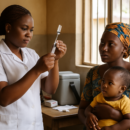
South African health authorities have warned parents and caregivers to monitor children for potentially dangerous dehydration after surveillance detected a sharp increase in rotavirus cases in Pretoria.
In an August 31 statement, the National Institute for Communicable Diseases said the country’s 2026 rotavirus season remained under way nationwide. The institute highlighted vaccination, early recognition of symptoms and prompt medical attention for severe dehydration as important measures during the seasonal rise.
Rotavirus is a common childhood infection that causes diarrhoea and is transmitted through the faecal-oral route, according to the NICD. Illness may begin with sudden vomiting before progressing to non-bloody, watery diarrhoea. Children may also develop a fever, lose their appetite, become lethargic or experience mild abdominal discomfort.
Professor Nicola Page of the NICD’s Centre for Enteric Diseases told Eyewitness News that the typical pattern is vomiting followed by profuse watery diarrhoea and some fever. The greatest immediate danger is not simply the gastrointestinal illness itself, but the loss of fluid that can accompany it.
“And the dehydration is what is life-threatening,” Page said.
Signs of dehydration in children
The NICD urged adults caring for children to be alert to early or moderate dehydration. Warning signs include crying without tears, a dry mouth, sunken eyes and, in babies, a sunken soft spot on the head. Fewer wet nappies can also indicate that a child is losing too much fluid.
Changes in a child’s behaviour may provide additional clues. The institute said an unusually fussy child, or one who is listless, lethargic or refuses to eat or drink, may be showing signs of dehydration. Parents and caregivers should pay particular attention when these symptoms occur alongside repeated vomiting or watery diarrhoea.
Severe dehydration can cause excessive sleepiness or limpness, dark urine, cold or discoloured skin, and rapid breathing or heartbeat. Another serious sign is skin that stays raised or “tented” after it has been gently pinched rather than returning promptly to its normal position.
The NICD said severe dehydration is a medical emergency. A child showing these symptoms should be taken immediately to the nearest clinic or medical facility.
Vaccination schedule
South Africa’s Expanded Programme on Immunisation provides oral rotavirus vaccine doses to infants at six weeks and again at 14 weeks. The timing is set out in National Department of Health immunisation guidance and was reiterated in reporting by Eyewitness News.
The NICD encouraged parents to protect children through vaccination and to remain attentive to dehydration symptoms during the ongoing season. Caregivers should check that infants receive the scheduled doses through the national immunisation programme.
Advice for childcare facilities
Page also advised childcare facilities to send home or isolate children who arrive with diarrhoea. Because rotavirus is spread through the faecal-oral route, she emphasised careful handwashing, particularly after changing nappies.
The guidance places responsibility on both households and childcare settings to recognise illness early and limit opportunities for transmission. Staff should act when diarrhoea is noticed rather than keeping a symptomatic child in contact with others at the facility.
For parents, the NICD’s central warning is to look beyond the presence of diarrhoea and vomiting and assess how the child is behaving and whether there are signs of fluid loss. Reduced urination, an unusually dry mouth, absent tears or increasing lethargy can signal that the illness requires closer attention, while severe symptoms demand immediate medical care.