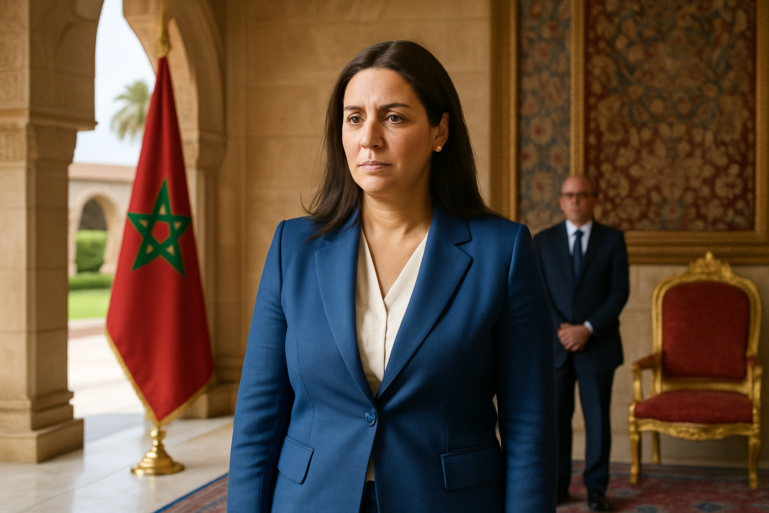
RABAT, Morocco — King Mohammed VI appointed Fatima Ezzahra El Mansouri as Morocco’s Head of Government on Tuesday, making the 50-year-old attorney and cabinet minister the first woman to serve as the country’s prime minister.
The king received El Mansouri at the Royal Palace in Rabat on September 29 and asked her to form a new government, according to a communiqué from the Royal Household Ministry. The appointment was made under Article 47 of Morocco’s Constitution.
El Mansouri takes on the task after the Authenticity and Modernity Party, known by its French abbreviation PAM, finished first in Morocco’s September 23 election for the House of Representatives. Final results issued by the Interior Ministry awarded PAM 97 of the chamber’s 395 seats, more than any other party.
That result placed El Mansouri’s party at the center of the government-formation process but left it well short of the 198 seats required for an absolute majority. She must now negotiate with other political parties to assemble a governing coalition before presenting the new government.
A first for Morocco
El Mansouri’s appointment marks the first time a woman has led Morocco’s government. The formal title is Head of Government, a position commonly translated into English as prime minister.
At the time of her appointment, El Mansouri was serving as Morocco’s urban-planning minister and as mayor of Marrakech. A trained attorney, she also coordinated PAM’s collegial leadership, giving her a central role in the party that secured the largest parliamentary bloc in the election.
Her selection followed six days after Moroccans voted for members of the House of Representatives on Wednesday, September 23. The final Interior Ministry count confirmed PAM’s position with 97 seats in the 395-member chamber.
The appointment begins the next stage of the post-election process. Although PAM holds the largest number of seats, its total amounts to fewer than half of those needed for an absolute majority. Reaching the 198-seat threshold would require support from parties holding at least 101 additional seats.
The balance means the composition of the next government will depend on coalition negotiations. El Mansouri must seek agreements capable of turning PAM’s electoral lead into a workable governing alliance while deciding how cabinet responsibilities will be distributed among participating parties.
From election result to coalition talks
The royal communiqué formally assigned El Mansouri responsibility for forming the government. It identified Article 47 of the Constitution as the basis for the appointment and confirmed that the king had entrusted her with assembling the new administration.
PAM’s first-place finish gave it the largest individual share of seats, but the fragmented result prevents it from governing with an absolute majority on its own. The difference between winning the most seats and controlling the chamber places coalition-building at the heart of El Mansouri’s immediate work.
Her existing roles give the incoming prime minister experience in national government, municipal leadership and party management. As urban-planning minister, Marrakech mayor and coordinator of PAM’s collective leadership, she held responsibilities across several levels of Moroccan politics when she was summoned to the palace.
The new appointment also changes the composition of political leadership at the highest level of the Moroccan government. No woman had previously served as Head of Government or prime minister in the country.
El Mansouri will now move from leading the party with the largest parliamentary delegation to negotiating the coalition required to form an administration. PAM’s 97 seats provide the starting point, but the party cannot reach an absolute majority without substantial backing from other groups in the House of Representatives.
The eventual coalition will determine the parliamentary foundation of the government El Mansouri has been tasked with presenting. Until those negotiations are completed, the election’s largest party has a mandate to lead the formation process but not the numbers to govern alone.