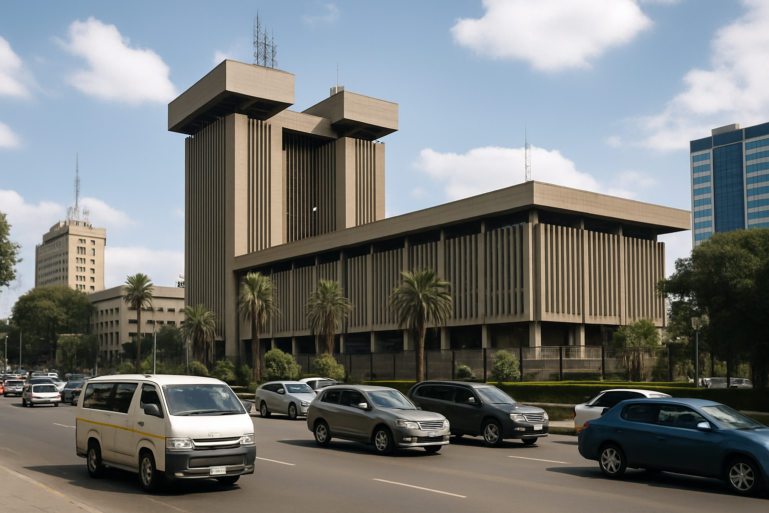
NAIROBI — The Central Bank of Kenya left its benchmark interest rate unchanged at 8.75% on Wednesday, extending a policy pause as inflation moved higher and the bank slightly raised its economic growth forecast for 2026.
The Monetary Policy Committee maintained the Central Bank Rate at its October 7 meeting, marking the fourth consecutive gathering at which policymakers kept borrowing costs steady. The committee previously held the rate at 8.75% on April 8, June 9 and August 11, after lowering it to that level on February 10.
The decision came after Kenya’s overall inflation increased to 6.8% in September from 6.6% in August. The latest figures showed divergent trends within the inflation basket, with core inflation rising while non-core inflation eased.
Core inflation, which provides a measure of underlying price pressures, climbed to 4.0% in September from 3.4% a month earlier. Non-core inflation, meanwhile, declined to 14.0% from 14.7%.
The central bank said government measures were helping to contain the effect of price increases on consumers. “Government interventions, including subsidies and the temporary reduction of VAT on fuel, continue to mitigate inflationary pressures,” it said in its October 7 statement.
By keeping the policy rate unchanged, the committee continued the steady stance it has maintained since April. The run of four consecutive holds follows the February reduction to 8.75%, leaving the benchmark at the same level for nearly eight months by the time of the October meeting.
The outcome was broadly in line with economists’ expectations. Nine of 11 economists surveyed by Reuters had forecast that the rate would remain unchanged, while two had expected the central bank to raise it to 9.0%.
Growth forecast raised
Alongside the rate decision, the Central Bank of Kenya increased its projection for economic growth in 2026 to 5.0%, up from an earlier estimate of 4.9%. It said the economy expanded by 4.6% in 2025.
The bank kept its forecast for 2027 growth unchanged at 5.3%, indicating that it continued to expect a further acceleration next year. The modest upgrade for 2026 came despite the increase in headline and core inflation recorded in September.
The growth projections provide an important backdrop for monetary policy. The benchmark rate influences borrowing conditions across the economy, while the committee also monitors inflation and external-sector developments when setting its stance.
Current-account gap expected to widen
The central bank projected that Kenya’s current-account deficit would equal 3.2% of gross domestic product in 2026, widening from 2.1% in 2025. The current account tracks a country’s transactions with the rest of the world, including trade and other cross-border income flows.
The larger projected deficit adds another factor for policymakers to monitor alongside domestic price pressures and economic growth. However, the committee opted not to adjust rates at the October meeting, maintaining the level established in February.
September’s inflation data presented a mixed picture. The rise in core inflation suggested stronger underlying pressure than in August, while the decline in non-core inflation offered some offset. Overall inflation nevertheless moved up for the month, reinforcing the importance of government measures cited by the bank in limiting additional price increases.
The October decision extends a period of policy stability following the February cut. With the 2026 growth outlook now marginally stronger and the 2027 projection unchanged, the committee maintained its existing rate rather than tightening policy in response to the latest inflation increase.
Future decisions will be assessed against an economy the central bank expects to grow faster than in 2025, a wider projected current-account deficit and inflation indicators that moved in different directions in September. For now, the benchmark rate remains at 8.75%, where it has stood since February.