NAIROBI, Kenya — Kenya has recorded 1,298 confirmed mpox cases and 19 deaths across 40 of its 47 counties, prompting health officials to call for stronger preventive measures, closer surveillance and sustained public awareness.
Mary Muthoni, Principal Secretary in the State Department for Public Health and Professional Standards, announced the figures on September 7, 2026, after a management meeting with departmental heads to review the country’s response to the outbreak.
“Culminatively on Mpox we have 1,298 confirmed cases and we also have 19 deaths so far. We have 40 out of 47 counties that are affected,” Muthoni said, according to Capital FM Kenya.
The geographic reach of the infections means only seven counties had not reported confirmed cases under the tally presented by the ministry. Officials highlighted the need for vigilance in areas connected to major transport routes and international borders, where population movement can complicate efforts to identify and manage infections.
Mombasa and Nairobi record highest totals
Mombasa had the largest number of confirmed cases, with 452, followed by Nairobi with 320. Busia had recorded 115 cases.
The three counties together accounted for a substantial portion of the national total. Mombasa is a major coastal transport centre, Nairobi is the country’s capital and largest urban hub, and Busia lies along Kenya’s border with Uganda.
Health authorities identified Mombasa, Nairobi, Busia, Makueni, Kiambu, Kilifi and Nakuru as the seven counties facing the highest risk, particularly because of their links to transport corridors and cross-border movement.
The designation is expected to guide attention toward locations where screening, surveillance and public communication are especially important. Authorities did not suggest that prevention should be limited to those counties, however, as confirmed infections have already been reported in most parts of the country.
Border surveillance and entry screening
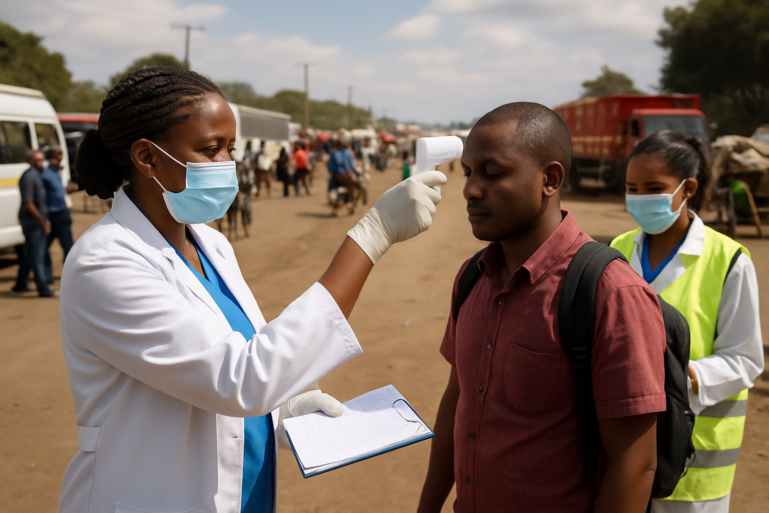
Muthoni said the government would maintain surveillance at border locations and screening at entry points as part of its response.
“We will continue enhancing our surveillance at the border points and also ensure that there is screening that is happening at our points of entry,” she said.
Closer monitoring at these locations is intended to support the identification of cases among people moving into or across the country. The government’s focus on border points also reflects concern about counties linked to busy road networks and regional travel.
The response meeting further emphasized vaccination and public awareness, according to Kenya Broadcasting Corporation. Continued sensitization is aimed at ensuring that residents understand the preventive guidance being issued and remain alert as health teams track the outbreak.
Public urged to maintain hygiene
Muthoni called on Kenyans to observe high standards of hygiene and follow mpox preventive measures. The appeal places individual precautions alongside government interventions such as surveillance, screening and vaccination.
Public sensitization remains a central part of the response because the outbreak now affects communities across a wide area. Health messaging is particularly important in counties with high case totals and in places experiencing frequent movement of people.
The management meeting brought departmental leaders together to assess current measures and reinforce coordination. With infections confirmed in 40 counties, the government’s response is focused on containing further spread while maintaining attention on the seven areas considered most vulnerable.
Officials are urging continued vigilance rather than limiting concern to the three counties with the largest totals. The latest figures show that mpox is not confined to one region, making cooperation between national authorities, county administrations, border teams and the public a key part of the response.