WASHINGTON — The United States has extended the African Growth and Opportunity Act through December 31, 2028, preserving preferential, duty-free access to the American market for eligible exports from qualifying sub-Saharan African countries, including Kenya.
President Donald Trump signed H.R. 6500, the Continuing Appropriations and Extensions Act, 2027, on September 2, 2026. The measure became Public Law 119-103.
Section 2008 of the law changes AGOA’s expiration references from 2026 to 2028, continuing the trade preference program through the end of that year. The enacted legislation also extends AGOA’s regional apparel article program and third-country fabric program until December 31, 2028.
The decision provides a longer planning window for Kenyan businesses whose exports qualify for AGOA treatment. It also gives manufacturers and investors greater clarity about the duration of the trade preferences as they make production, sourcing and market-access decisions.
Kenya welcomes longer period of access
Kenya’s Cabinet Secretary for Investments, Trade and Industry, Lee Kinyanjui, welcomed the enactment, emphasizing the importance of a clear timetable for companies trading with the United States.
“This is a significant development for Kenya and provides much-needed certainty for exporters, manufacturers and investors who rely on preferential access to the United States market,” Kinyanjui told The Standard.
The extension does not make all Kenyan goods automatically duty-free. The preferences apply to eligible products from countries that qualify under AGOA, and access remains subject to the program’s applicable requirements. For businesses that meet those conditions, however, the law keeps the preferential framework in place for two additional years beyond the previous 2026 expiration references.
That distinction is important for exporters assessing the commercial effect of the legislation. AGOA provides a route to duty-free entry for qualifying goods, but the benefits depend on both country eligibility and whether individual products satisfy the relevant rules.
Apparel provisions extended alongside AGOA
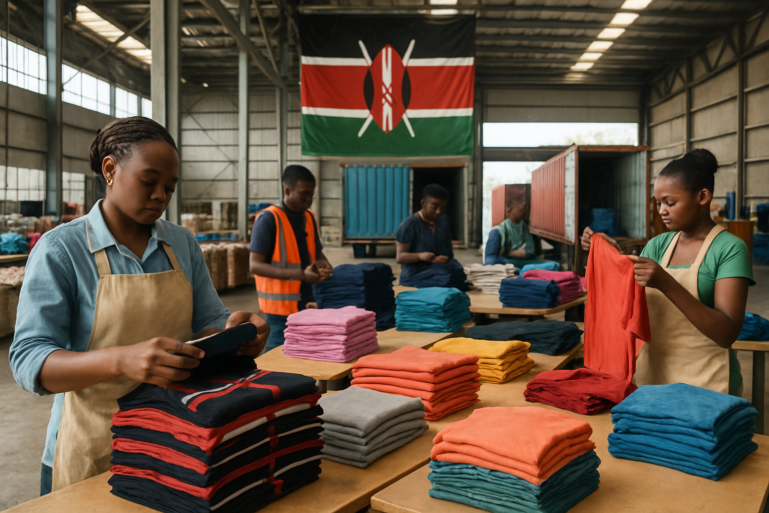
The continuation of the regional apparel article and third-country fabric programs is particularly relevant to companies operating in AGOA-linked apparel supply chains. By moving the expiration of those provisions to the end of 2028, Congress maintained the legal basis for eligible apparel trade under those arrangements for the same period as the wider program.
For Kenyan manufacturers, the combined extensions reduce the immediate risk that the principal AGOA preferences and the associated apparel provisions would end on different schedules. A common December 31, 2028, deadline gives exporters, buyers and investors a defined period in which the existing statutory arrangements will remain available, subject to eligibility rules.
The law does not make the program permanent. Unless Congress acts again, the new expiration date remains December 31, 2028. The current measure therefore offers additional certainty without resolving AGOA’s status beyond that point.
Trade continuity for qualifying exporters
AGOA’s continuation matters to Kenya because preferential access can affect the cost of supplying the US market. Duty-free treatment for eligible goods can help qualifying exporters compete on price, while a confirmed expiration date allows companies to plan orders and investment against a known policy horizon.
The extension may also limit near-term disruption for businesses that had been monitoring the approaching statutory deadline. Manufacturers can now assess contracts, sourcing arrangements and production plans with confirmation that the program and the specified apparel provisions have been continued through 2028.
The enacted text provides the controlling legal change: references to the 2026 expiry are replaced with 2028. The White House confirmed the president’s signature, while the official enrolled bill published by the US Government Publishing Office sets out the extension in Section 2008.
For Kenya, the immediate result is continuity rather than a new trade arrangement. Eligible Kenyan exports retain access to AGOA preferences under the extended timetable, while exporters must continue to meet the conditions governing qualification and product eligibility.